

Joint Venture Agreement
A Joint Venture Agreement allows two or more parties to enter into a legally binding business contract.
4.4 (73 reviews)
Last updated October 24, 2025
Under 10 minutes
Suitable for Australia
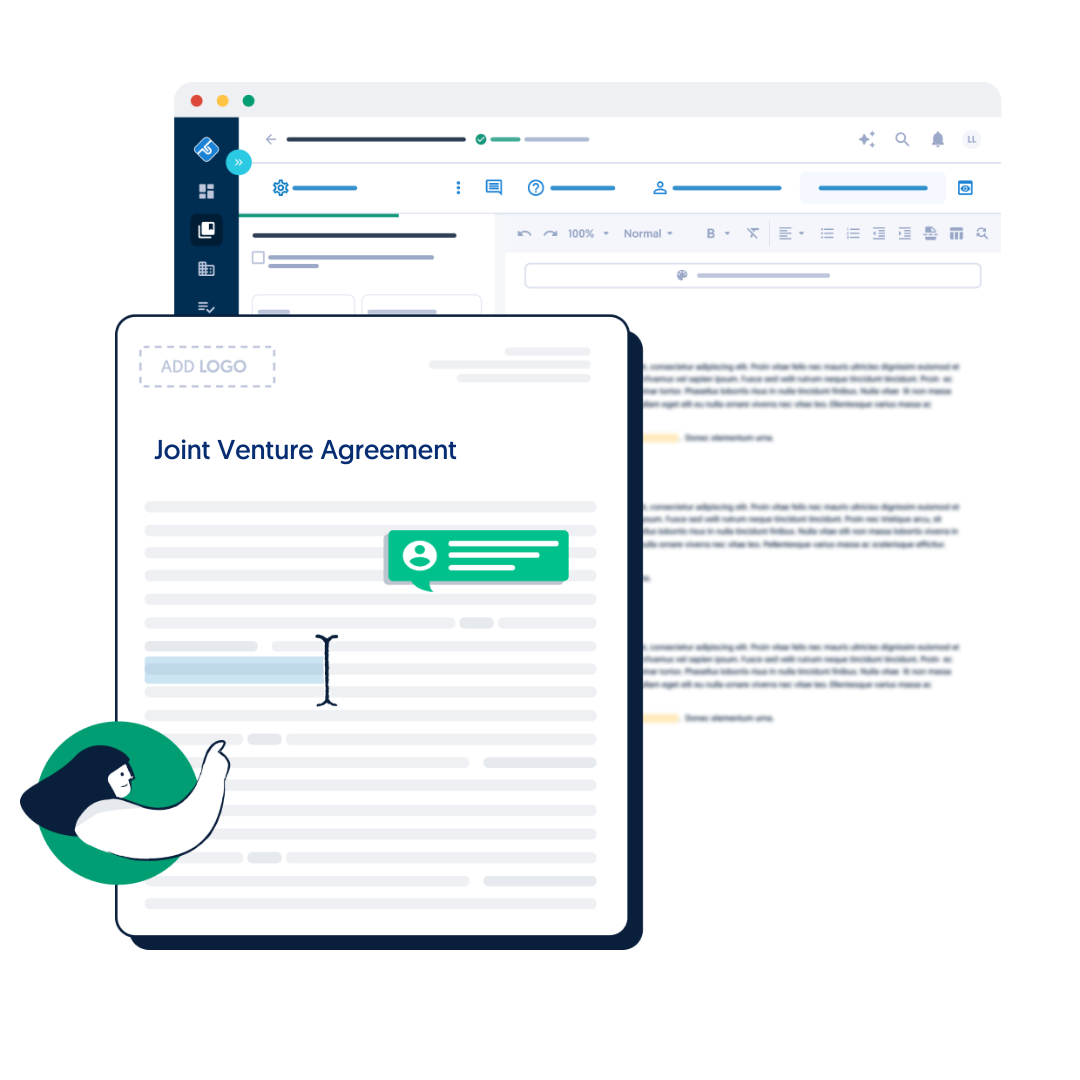
Trusted by








Why we are trusted by 500,000 businesses
Up-to-date compliance with regulations
Laws and regulations are continually evolving, and failure to comply can result in severe consequences for businesses. Our Joint Venture Agreement is constantly updated by legal professionals to ensure it stays up-to-date with the latest laws and regulations in Australia.
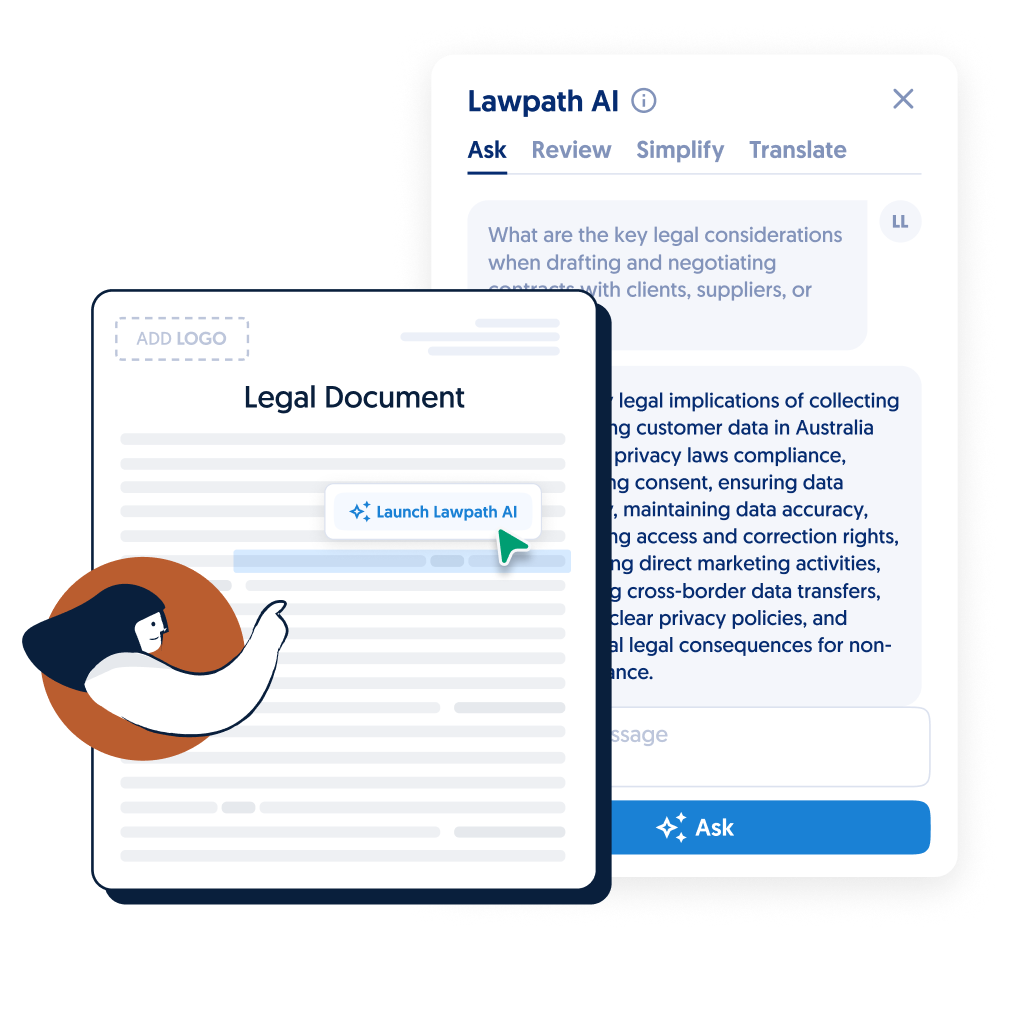
Advanced Al for Personalised Joint Venture Agreement
Leveraging advanced Al technology and guided questionnaires, we ensure the Joint Venture Agreement is customised to meet the unique needs and specific requirements of your business.

Efficiency and Convenience
With a few clicks and by answering a guided questionnaire, we incorporate your responses into a professionally drafted Joint Venture Agreement in under 5 minutes.
How it works
Follow the steps below and you'll have your ready-to-use document in no time

STEP 01
Set up a free account

STEP 02
Search and find the document you need from our list

STEP 03
Follow the prompts and fill in all the relevant details

STEP 04
View and share your ready to use legal document
It's never been so easy
Sign-up to a free Lawpath account
Get started and we'll take care of you. It's that easy.
Browse our 500+ legal documents
Browse our 500+ legal documents to find the perfect match to cover your business needs. We've got Compliance, Employment, Service agreements and more.
Collaborate with e-Sign and Sharing
Having access to your legal documents has never been easier. You can request e-signature, share the document and download for an efficient collaboration.

Here's what people say about Lawpath’s Joint Venture Agreement
Reviews are managed by BazaarVoice and comply with the BazaarVoice Authenticity Policy. Reviews are independently verified by BazaarVoice and detail our customers' real experiences.
0 reviews
Most Recent
Highest to Lowest Rating
Lowest to Highest Rating
Document Overview
A Joint Venture Agreement is a contract between two or more parties who want to do business together for a period of time, without creating a formal partnership or new legal entity. Usually, both parties have an equal stake in the venture, and will both reap the benefits. This Agreement is structured so as to provide the overall framework for the joint venture, while individual projects will be agreed on by the parties as Project Schedules. It should be carefully reviewed.
When is a Joint Venture Agreement used?
A joint venture agreement is typically used when:
- Introducing your product to penetrate the market swiftly;
- Supplementing financials and support for your idea that is currently out of reach;
- Developing the product further before looking at licensing. A joint venture can eventuate into a potential licensing agreement;
- Forming an alliance with a group or individual that has expertise in engineering or industrial design, who is basically able to finalise the product design and prototypes; or
- Expanding your knowledge on the market and potential distribution channel contacts, which can all be utilised for subsequent inventions.
Considerations of a Joint Venture Agreement
Financial prospects
One of the main advantages of a joint-venture strategy is that it allows you to supplement your financial resources by collaborating with your potential partner. These added resources to your lucrative venture can be sought by showcasing a design to the potential partner and then inquiring into the possibility of financial support to finalise a prototype. If the partner is happy with the end design and its viability in the market, then the two parties would generally proceed with the marketing and processes required. This process is much easier to sell to a company than a licensing agreement, as licensing often results in a loss of control.
Protect your idea
Whilst patenting your idea is not essential, it definitely generates a strong negotiable position and legally protects the intellectual property in your product. There is the option to apply for a provisional patent, however it can prove to be risky. The risky nature of this certain patent is due to the time restrictions placed on the user, as it only gives them one year to apply for a utility patent. That year could quite easily end before finalising the agreement with a partner and the product design itself. The more conservative and safe option would be to opt for a very broad patent, which allows you to keep going back and forth with the patent office for several years. This avenue can keep your patent rights open for three to five years.
Something to showcase
It may be difficult for some to manufacture a finalized prototype due to a lack of financial resources, for those that have the opportunity or resources available, I encourage you to develop a prototype prior to pitching the product to potential partners. Being able to offer this to a potential partner is key in that it generates an opportunity for them to visualise the product’s sales potential and its viability in the market.
Do’s and Don’ts when engaging in a Joint Venture
- Don’t be too ambitious and ask for an enormous percentage of profits. Be realistic and keep it below 50%, in an attempt to incentivise the partnership;
- Ensure that the idea itself is not the only thing you bring to the table. You’re not required to take on every function required for the development of the concept, however it is appealing to your partner if you offer a know-how to engineering the product or a strong network of contacts within the distribution channel to expedite sales’
- Make sure that you’ve done your market research. Well prepared individuals will have a more favourable position if they have survey results from 20-30 users and even stronger with respondents from your potential distribution channel.
- You MUST keep the momentum of the project going, whether that be constantly working on the marketing of the product or even brainstorming improvements for the design itself.
Being hit with curveballs is inevitable:
- You may encounter some loss of control over the project;
- You will be somewhat dependent on the other party to complete their jobs to a reasonable standard;
- You won’t be able to withdraw the product and start the company on your own once the joint venture is formally established; and
- Your stance and inputs may be overridden by the partner.
Your first document is on us!
Sign up to a free Lawpath account.
Need additional assistance?
Our experienced lawyers are here to help.