

Letter of Intent
A Letter of Intent (LOI) is a document signed between two parties when they wish to commence formal negotiations.
4.5 (28 reviews)
Last updated October 23, 2025
Under 15 minutes
Suitable for Australia
Trusted by








Why we are trusted by 500,000 businesses

Up-to-date compliance with regulations
Laws and regulations are continually evolving, and failure to comply can result in severe consequences for businesses. Our Letter of Intent is constantly updated by legal professionals to ensure it stays up-to-date with the latest laws and regulations in Australia.
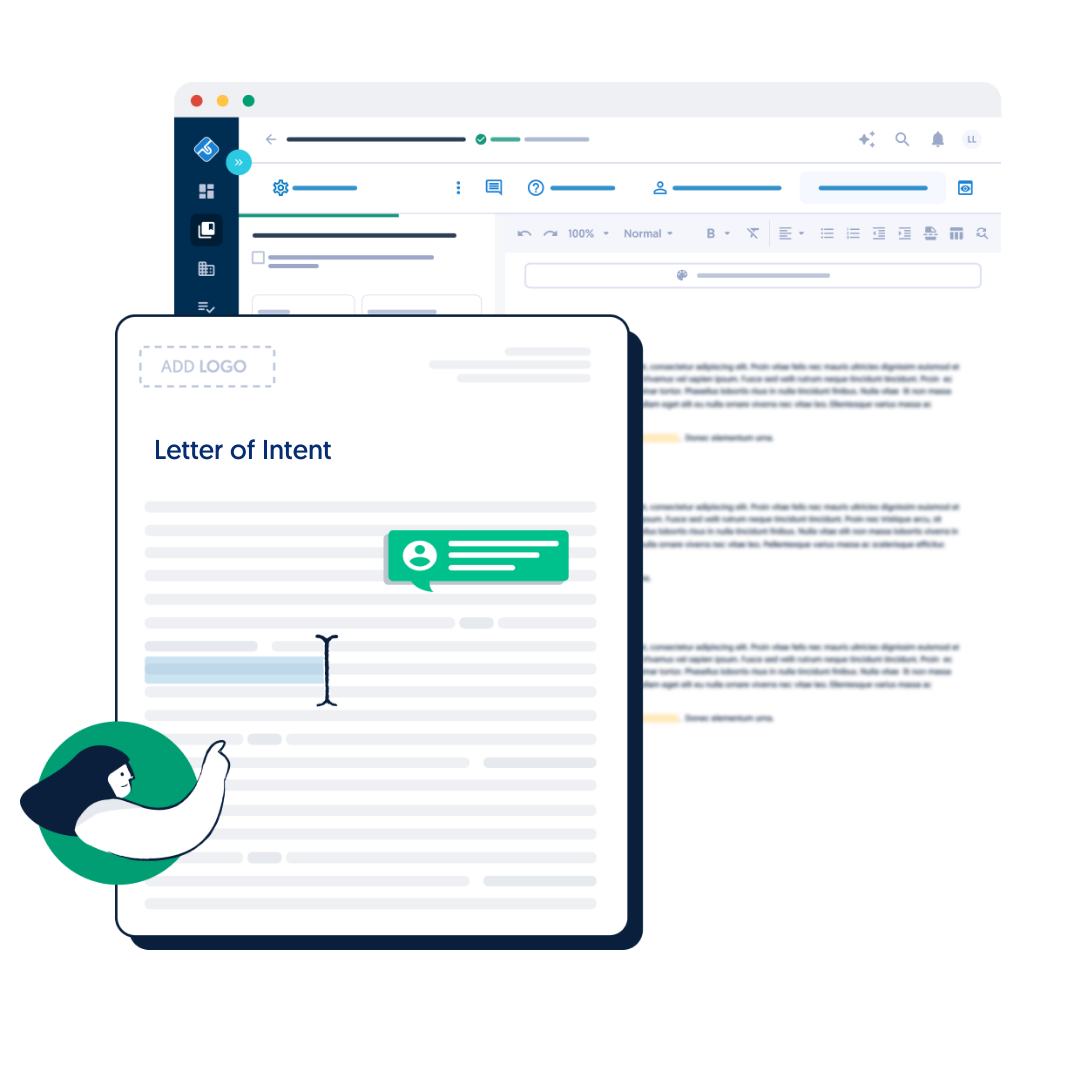
Advanced Al for Personalised Letter of Intent
Leveraging advanced Al technology and guided questionnaires, we ensure the Letter of Intent is customised to meet the unique needs and specific requirements of your business.

Efficiency and Convenience
With a few clicks and by answering a guided questionnaire, we incorporate your responses into a professionally drafted Letter of Intent in under 5 minutes.
How it works
Follow the steps below and you'll have your ready-to-use document in no time

STEP 01
Set up a free account

STEP 02
Search and find the document you need from our list

STEP 03
Follow the prompts and fill in all the relevant details

STEP 04
View and share your ready to use legal document
It's never been so easy
Sign-up to a free Lawpath account
Get started and we'll take care of you. It's that easy.
Browse our 500+ legal documents
Browse our 500+ legal documents to find the perfect match to cover your business needs. We've got Compliance, Employment, Service agreements and more.
Collaborate with e-Sign and Sharing
Having access to your legal documents has never been easier. You can request e-signature, share the document and download for an efficient collaboration.

Here's what people say about Lawpath’s Letter of Intent
Reviews are managed by BazaarVoice and comply with the BazaarVoice Authenticity Policy. Reviews are independently verified by BazaarVoice and detail our customers' real experiences.
0 reviews
Most Recent
Highest to Lowest Rating
Lowest to Highest Rating
Document Overview
A Letter of Intent (LOI) is a document signed between two parties when they wish to commence formal negotiations. The terms of such a letter can differ, but its overarching purpose is to set things in motion, with a signed agreement being the finish line. This is often useful in situations where commencement can’t afford to be delayed while waiting for a formal contract to be drafted. A common example of this is major construction and infrastructure projects that typically have tight deadlines. Letters of Intent are regularly associated and confused for a memorandum of understanding. The key element that separates the two documents is the ability for a letter of intent to become legally binding in certain instances.
A Letter of Intent Signals a Formal start to Negotiations
Similar to how a starter pistol indicates an athletic race is to start, a letter of Intent (LOI) fundamentally serves as an indicator that two parties are commencing negotiations. This can be taken to be a written affirmation of many key elements of negotiating, such as good faith. Further, whilst you may not have the final terms of your contract set out, it is wise to have a document which symbolises that this is soon to be the case.
Confidentiality
Letters of Intent are not in their entirety not legally binding. They often contain clauses which require that parties to the negotiation do not disclose information they have learned about the other side in their negotiations. Subsequently, you or your company’s confidential information is protected. In the event that the negotiations don’t come to fruition, you at least have the other side’s word that the details of these negotiations won’t be disclosed. If you want confidentiality to be a term of your negotiations, you can do this by inserting such a clause into your Letter of Intent or having the other side sign a non-disclosure agreement.
It Can Provide a Structure to Your Negotiations
Negotiations can be difficult where there is no plan of what you want to achieve, or no timeline by which to achieve it. A Letter of Intent or Memorandum of Understanding can set out these rules, so negotiations don’t stall, or so that the parties don’t get sidetracked by issues which are not relevant to the agreement that is intended to be made by the parties. If negotiations are not completed by a certain time (say, 6 months after they started) then you can refer to this document to ‘push’ them along, or to even walk away if no progress is being made.
It Can Contain or Clarify Details of a Party’s Objective
Perhaps both parties already have a specific idea of what the contract will be, and it’s just the nuts and bolts which need to be negotiated. In this case, a Letter of Intent or Memorandum serves as the statement which will keep things in place until a contract is signed. A common example of this is in Mergers and Acquisitions. In this case, a company knows it is going to acquire another entity – it may just be the timeline and price that need to be finalised. Further a Letter of Intent can be used personally – if you want to make any wishes known in the event something happens to you. Though not as concrete as a will, a Letter of Intent will still be taken into consideration.
What’s the difference between a Letter of Intent and Memorandum of Understanding?
A memorandum of understanding sets out the proposed terms in the negotiation stage, however, it is not legally binding in nature. A letter of intent is used in most large business transactions and outlines the process of negotiation and provides a structure for how things will proceed in the intended agreement. Unlike a memorandum of understanding, provision of a letter of intent can be considered legally binding in regards to certain provisions, if specified within the letter of intent.
Your first document is on us!
Sign up to a free Lawpath account.
Need additional assistance?
Our experienced lawyers are here to help.